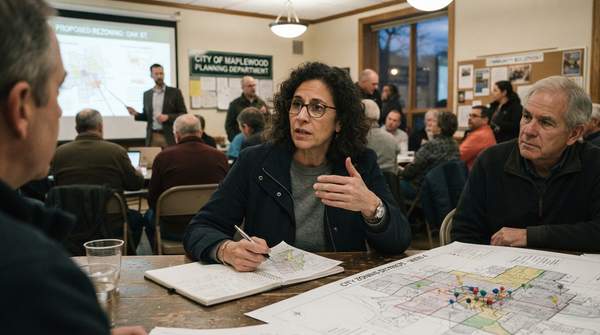
Most zoning changes follow the same basic path: an application, a review by local planning staff, a public hearing, and a decision by a local board or governing body. But the right application depends on what you actually want to do. A homeowner who needs a few extra feet of setback applies for something very different from a business owner who wants to convert a residential parcel to commercial use. This guide walks through the main types of zoning changes, the typical process, and what these decisions mean for your property and neighborhood.
What is Zoning and Why it Matters to You
Zoning divides land in a community into different areas, or "zones," and regulates which uses can go in which zone—housing in residential zones, for example. According to guidance from the Institute for Local Government, a central goal of zoning is keeping neighboring land uses compatible with one another. If someone wants to use their property in a way the current rules don't allow, they can ask that the zoning regulations be changed.
For individual owners, those rules show up in everyday decisions. The Daytona Beach REALTORS® note that homeowners who are unaware of zoning laws can face unexpected challenges, such as limitations on renovations or changes in property designation. Adding a fence, swimming pool, garage, or home addition may require zoning approval, and failing to check the rules first can result in costly mistakes. Property along a busy street may even be rezoned from residential to commercial as traffic and business activity grow.
Keep in mind that zoning is administered locally. Terminology and procedures vary significantly between municipalities, states, and counties, so this overview is a starting point, not a substitute for your local code or legal advice.
Identifying Your Need: Types of Zoning Changes
Not every zoning problem requires the same fix. Broadly, there are three common routes, and choosing the wrong one wastes time and fees.
A variance is for owners who want to use land in a way that is not permitted under current zoning laws, as the New Jersey land use firm Askin & Hooker explains. Variances come in different forms: a use variance allows a property to be used in a manner not normally permitted, while other variances address physical requirements like setbacks or height. In New York City, the Board of Standards and Appeals can grant variances after a public hearing—but only when the zoning regulations cause a hardship for the owner, the variance is justified by unique circumstances, and it does not harm the neighborhood's character.
A special permit covers uses that are not outright permitted but may be allowed under certain conditions. New York City's planning department describes these as permits for smaller-scale modifications to zoning rules, handled by its Board of Standards and Appeals rather than the full legislative process.
A rezoning, or zone change, alters the fundamental classification of a property or area—for instance, from residential to commercial. The Institute for Local Government describes this as a request to change the zoning regulations themselves, a significant change to the community's land use plan and a legislative act by the local governing body.