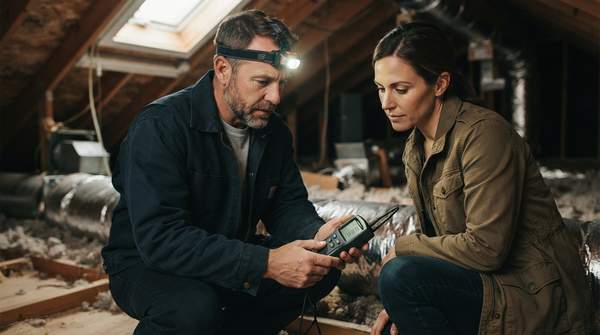
The most reliable way to hire a contractor for energy-efficient home upgrades is to verify three things before signing anything: a recognized certification such as BPI accreditation, a whole-home diagnostic approach, and affiliation with a local utility or state energy program. Cornell Cooperative Extension of Tompkins County notes that to qualify for most financial incentives for home energy improvements, you must use a BPI-accredited contractor. That single requirement connects the quality of the work to the money available to pay for it, and it gives you a concrete standard to judge every candidate against.
Understanding the 'House-as-a-System' Approach
BPI stands for the Building Performance Institute, a national organization that sets accepted standards for energy contractors. According to Cornell Cooperative Extension, BPI-accredited contractors are rigorously trained in the "house-as-a-system" approach, which assesses and improves a home's energy performance, comfort, and air quality together rather than in isolation.
This matters because your home's components interact. Sealing air leaks, adding insulation, and replacing heating equipment all affect one another, along with ventilation and indoor air quality. A contractor who treats the house as a system will evaluate how a proposed improvement changes the whole building, not just the spot where work is done.
Cornell's guidance also points to results: home energy upgrades by BPI-accredited contractors have been proven to reduce energy usage, often by 20% or more. BPI-accredited contractors must also have third-party verification to ensure their work meets quality standards. When you interview candidates, ask how they evaluate the interactions between energy use, comfort, and air quality — a systems-trained contractor will answer in those terms.
Key Credentials and Certifications for Energy Contractors
BPI accreditation is the credential most tied to incentive eligibility, but it is not the only nationally recognized mark of a qualified home energy professional. Depending on the role — auditor, rater, or quality inspector — other certifications signal comparable training.
The Association of Energy Engineers describes its Home Energy Professional certifications, developed under the U.S. Department of Energy's Weatherization Assistance Program (WAP) Guidelines for Home Energy Professionals project, which was created to ensure robust, nationally recognized workforce credentials. The Single-Family Energy Auditor certification, for example, designates an experienced professional who evaluates potential health and safety issues, durability, comfort, and energy use of a residential building.
Training provider Everblue notes that the BPI Building Analyst Professional, HEP Energy Auditor, and RESNET HERS Rater certifications are all covered under the Department of Energy's Energy Auditor Training Grant Program, and RESNET-accredited training centers operate across the country. For homeowners, the practical takeaway is simple: ask which certification a contractor holds, and treat BPI, HEP, and RESNET credentials as evidence of nationally standardized training rather than marketing claims.
Alongside national credentials, Energy Trust of Oregon advises a basic legal check: confirm the license. Verifying a contractor's standing with your state licensing board confirms they are legally authorized to perform work in your area.