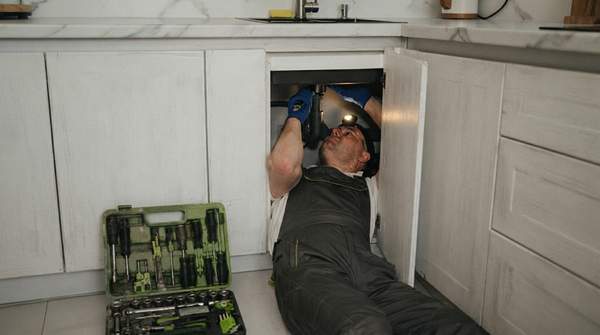
Hiring a low-cost contractor may save homeowners 20-30% upfront, but this initial saving often masks significant future losses. Poor workmanship can reduce home value and necessitate expensive fixes, frequently costing 2-3 times the original project budget, according to Phillips Outdoor Services. Immediate savings, in this context, often guarantee future expenditures.
Homeowners frequently seek to save money by hiring cheaper contractors, yet this approach often leads to much higher costs and risks. Rushed hiring, devoid of proper research, directly transfers significant legal liabilities and safety risks to homeowners—risks legitimate contractors are legally bound to cover, as noted by Destinationmammoth. Prioritizing upfront cost savings over thorough contractor vetting will likely result in significant financial burdens and safety hazards. Diligent homeowners, who prioritize comprehensive vetting and reputable contractors offering robust protections, avoid the pitfalls of rushed decisions.
1. Essential Protections Your Contractor Must Offer
Best for: Homeowners prioritizing legal compliance and risk mitigation
Neglecting to verify a contractor's licensing and insurance invites risks: safety and code violations, shoddy workmanship, and unexpected costs, according to Destinationmammoth. General liability insurance of at least $1 million coverage is a key protection, states Phillips Outdoor Services. Without these safeguards, homeowners assume full liability for accidents, property damage, or code violations, turning a project into a personal financial and legal crisis.
Strengths: Mitigates financial and legal liabilities; ensures regulatory compliance. | Limitations: Proof requires independent verification. | Price: Assuming full liability for accidents or property damage.
2. Can you provide a detailed breakdown of your bid, including materials, labor, and other costs?
Best for: Homeowners seeking transparency and fair pricing

Choosing a contractor based solely on the lowest bid is a costly mistake; poor workmanship can reduce home value and require fixes costing 2-3 times the original budget, according to Phillips Outdoor Services. NARI advises comparing 'apples to apples' by considering quality, timeline, and scope, reported Destinationmammoth. A detailed bid allows homeowners to discern true value beyond surface-level pricing, preventing costly surprises and ensuring project integrity.
Strengths: Promotes transparency; allows accurate bid comparison; prevents hidden costs. | Limitations: Requires homeowner diligence to understand all line items. | Price: Paying for unexpected extras or inferior materials.
3. How do you ensure the quality of materials and workmanship throughout the project?
Best for: Homeowners focused on long-term value and durability
NARI emphasizes 'quality' when evaluating bids: 'the bitterness of poor quality remains long after the sweetness of low price has been forgotten,' as noted by Destinationmammoth. Poor workmanship directly impacts home value. Without a clear quality assurance process, homeowners risk investing in a project that depreciates their property rather than enhancing it.
Strengths: Secures project longevity and aesthetic appeal; protects property value. | Limitations: Requires ongoing homeowner oversight or third-party inspection. | Price: Future repairs, reduced home value, and potential structural issues.
4. What is the estimated timeline for the project, and how do you manage potential delays?
Best for: Homeowners requiring predictable project completion
NARI suggests considering 'timeline' when evaluating bids, according to Destinationmammoth. A contractor's ability to articulate a realistic timeline and contingency plan signals professionalism and minimizes the financial and personal disruption of unforeseen delays.
Strengths: Establishes clear expectations; provides progress tracking. | Limitations: Timelines are subject to unforeseen circumstances. | Price: Extended disruption, additional living expenses, or lost income.
5. What is the scope of work included in your proposal, and what is explicitly excluded?
Best for: Homeowners needing precise project boundaries
NARI suggests considering 'scope' when evaluating bids to ensure an 'apples to apples' comparison, as reported by Destinationmammoth. Without explicit project boundaries, homeowners risk 'scope creep' and unexpected charges, turning a fixed-price project into an open-ended financial drain.
Strengths: Prevents scope creep and unexpected costs; ensures all desired work is covered. | Limitations: Requires homeowner to precisely define project needs. | Price: Additional work not covered, or incomplete project delivery.
6. Do you offer comprehensive warranties, and what do they cover (manufacturer and installation)?
Best for: Homeowners seeking post-completion protection
Legitimate contractors offer comprehensive warranties, backed by both the manufacturer and their installation work, with a written workmanship guarantee of a minimum of 1-2 years, states Phillips Outdoor Services. Robust warranties are not merely a courtesy; they are a contractor's commitment to accountability, shielding homeowners from the financial burden of premature failures or faulty installation.
Strengths: Provides recourse for defects; protects against premature failure. | Limitations: Warranty terms must be clearly understood and documented. | Price: Future repairs due to faulty materials or installation.
7. What is your experience in the home services industry?
Best for: Homeowners valuing proven expertise
Asking about a professional's experience in the home services industry is crucial, according to Careers Cacm. A contractor's track record directly correlates with their ability to foresee and mitigate project challenges, translating into a smoother, more reliable outcome for the homeowner.
Strengths: Indicates proven ability and knowledge base. | Limitations: Experience alone does not guarantee current quality or reliability. | Price: Errors or delays due to inexperience.
8. What measures do you take to protect my property and my neighbors' property during the project?
Best for: Homeowners concerned with site safety and property preservation
Professional contractors must protect your property, your neighbors’ property, and themselves throughout the construction process, according to Phillips Outdoor Services. A contractor's commitment to property protection reflects their overall professionalism and minimizes potential liabilities and disputes for the homeowner.
Strengths: Minimizes incidental damage; ensures site safety and cleanliness. | Limitations: Requires continuous homeowner monitoring. | Price: Repairing damages to property not covered by insurance.
9. How do you handle difficult or unhappy customers?
Best for: Homeowners seeking a professional and accountable service provider
Asking how professionals handle difficult or unhappy customers is suggested by Careers Cacm. A transparent approach to conflict resolution is a hallmark of a reliable contractor, ensuring that potential issues are addressed professionally rather than escalating into costly disputes.
Strengths: Provides insight into conflict resolution and customer satisfaction. | Limitations: Answers might be idealized; actual behavior could differ. | Price: Stress and potential legal costs from unresolved disputes.
| Question Focus | Primary Benefit to Homeowner | Risk of Neglecting This Question | Key Standard/Expectation |
|---|---|---|---|
| Licensing & Insurance | Legal protection, financial security | Assuming full liability for accidents/damages | $1M general liability, verified license |
| Detailed Bid Breakdown | Cost transparency, accurate comparison | Hidden fees, inferior materials | Line-item cost for labor, materials, fees |
| Quality Assurance | Project longevity, property value | Future repairs, diminished home value | Clear quality control process, material specs |
| Project Timeline | Predictable completion, expectation management | Extended disruption, increased living costs | Detailed schedule, delay management plan |
| Scope of Work | Defined project boundaries, no surprises | Scope creep, incomplete project | Explicit inclusions and exclusions |
| Warranties | Post-completion recourse for defects | Bearing full cost of premature failures | 1-2 year workmanship, manufacturer backing |
| Experience | Proven ability, knowledgeable execution | Errors, delays due to inexperience | Years in industry, relevant project history |
| Property Protection | Minimized incidental damage, site safety | Repair costs for damage to property/neighbors' | Site protection protocols, cleanliness plan |
| Customer Handling | Effective conflict resolution, satisfaction | Unresolved disputes, strained relations | Clear process for addressing concerns |
Prioritizing thorough vetting and robust contractor protections will likely define successful home improvement projects in the coming years, as homeowners increasingly recognize the true cost of cutting corners.