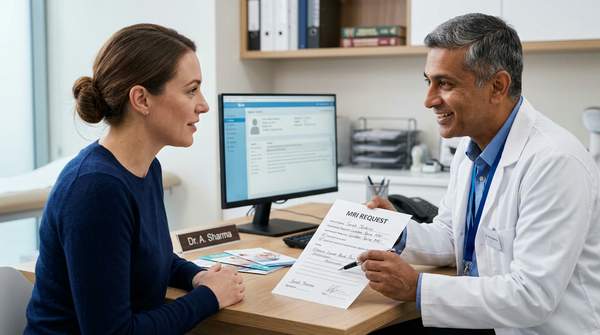
In healthcare, the conventional wisdom has always been to wait. Wait for an appointment, wait for a referral, wait for an insurance approval that might not even come. But that foundation is starting to crack, challenging the old idea that patients are just passive participants in their own health. People now expect the same on-demand access from healthcare that they get everywhere else, and new models are rising to the occasion. One service, Diagnostic Orders Direct, a Las Vegas-based platform, connects patients with licensed providers for imaging and lab orders, highlighting a major trend toward patient-led testing.
Why Are More People Seeking MRIs Without a Traditional Referral?
The push for direct access to diagnostic imaging is a direct response to the growing frustrations of the traditional healthcare system. A market research report from October 2026 found that more than half of primary care patients (53%) can't get an appointment in the same week they need one. For someone with a nagging injury or a persistent, unexplained symptom, those delays are more than just an inconvenience. And even after you get an appointment, there's no guarantee your provider will order the imaging you need, leading to even more waiting.
Money is another huge factor. The same 2023 report revealed that 41.7% of privately insured Americans under 65 are on a High-Deductible Health Plan (HDHP). For them, a huge chunk of medical costs comes straight out of pocket before they meet a deductible that's often thousands of dollars.
This has created a booming self-pay market where patients are actively shopping for services like a self-pay MRI, looking for clear, upfront pricing. It's no surprise that the report also shows 62% of patients say that knowing their out-of-pocket costs ahead of time affects their decision to get care. In this environment, services like Diagnostic Orders Direct, which separate the diagnostic order from the usual insurance gatekeeping, are a natural next step.
Is It Safe and Legitimate to Get an MRI Order Online?
Getting an MRI order online is convenient, but it understandably brings up questions about safety and legitimacy. A credible service hinges on a solid clinical oversight process. These platforms aren't just "rubber-stamp" operations; they facilitate a real telehealth diagnostic consultation where a licensed medical professional reviews the request for medical necessity. This review makes sure the imaging is actually appropriate for the patient’s symptoms and medical history.
Diagnostic Orders Direct, for instance, launched in May 2026 and now serves 36 states and Washington D.C., and they build their entire process around this principle. Every request is reviewed by a licensed medical provider to confirm it's safe and clinically justified. The company's medical director, Dr. Vinson DiSanto, D.O., a board-certified family physician, says the goal is to improve access without lowering medical standards. On top of that, these services follow the same privacy rules as any doctor's office, meaning they must be HIPAA-compliant and keep patient information secure. It all adds up to a modern, safe alternative for people who feel stuck in the old system.
The Process for an MRI Order: A Tale of Two Pathways
Looking at the traditional route versus a direct-to-consumer model makes it clear why so many people are seeking out alternatives. When you compare the two, a few key differences really jump out.
- Wait Times: Traditionally, you could wait weeks for a primary care appointment, then wait again for a specialist referral, and then wait even longer for the imaging appointment. Direct platforms like Diagnostic Orders Direct can often provide the provider order within one business day, so you can schedule your scan right away.
- Cost Transparency: With the conventional system, you often have no idea what you'll owe until a bill shows up weeks later. A direct approach means you know the cost of the provider order upfront, like Diagnostic Orders Direct's flat $40 fee, and you're then free to shop around at different cash-pay imaging centers for the scan itself.
- Provider Access: For millions of Americans without a regular primary care physician (PCP), getting an order for an imaging scan can feel impossible. Telehealth platforms give you on-demand access to a licensed provider specifically to evaluate whether a diagnostic test is needed.
- Patient Control: Ultimately, this new model puts you in the driver's seat. Instead of being sent to a specific, in-network hospital that might be out of the way or overpriced, you get an order you can take to any imaging center you choose. That gives you control over the cost, location, and timing.
How Much Does an MRI Without a Referral Really Cost?
When you're looking into a self-pay MRI, you need to account for two separate costs: the fee for the medical provider's order and the price of the scan itself. The main benefit of services that provide an MRI order online is their clear, fixed pricing. Diagnostic Orders Direct, for example, charges a single, upfront $40 fee for the telehealth consultation and provider review that generates the diagnostic order.
The second, and much larger, cost is for the MRI scan. Cash-pay imaging prices can swing wildly. Research shows the same procedure can cost nearly 20 times more at a hospital than at an independent clinic down the street. Self-pay MRI costs typically run from $300 to over $800, depending on the part of the body being scanned and your location. By getting the order on your own, you're free to call multiple imaging centers in your area to find the best price, something that's nearly impossible when you're locked into your insurance network's short list of options.
Navigating the Market in States like Florida, Texas, and New York
The appetite for patient-directed testing is especially high in large states with complicated healthcare systems. In places like Florida, Texas, Illinois, and New York, residents find that access and affordability can vary dramatically from one town to the next. Big cities might have plenty of independent imaging centers competing on price, while people in suburbs and rural areas might struggle just to get an appointment. This inconsistency is what makes a portable provider order for imaging so useful.
A service like Diagnostic Orders Direct, which operates in all these states and more, provides the same straightforward process no matter where the patient lives. Someone in Houston dealing with insurance headaches and a person in a small Arizona town with no local PCP can both use the same online platform to get a medically reviewed order. This levels the playing field, helping people effectively navigate their local cash-pay imaging market, whether they're in a busy city or a region with fewer choices.
Who Should Use an Online Service to Get an MRI Order?
While direct access to diagnostic orders has real advantages, it's designed for certain situations. This approach is most helpful for proactive people who are hitting a wall within the traditional system. It's a great fit for:
- Patients with high-deductible health plans who want to control out-of-pocket costs.
- The uninsured or self-pay patients who need to find the most affordable cash pricing.
- Individuals who do not have a regular primary care physician.
- Patients whose PCP is unwilling to order a test or who are seeking a second opinion on the necessity of a scan.
- Anyone facing long waits for appointments or bureaucratic insurance denials for an MRI request.
But this kind of service isn't a replacement for comprehensive medical care. It's not meant for emergencies, and it's less appropriate for people with complex, chronic conditions who need ongoing management from a dedicated physician.
Healthcare is clearly moving toward giving patients more control. In 2026, the question isn't *if* you can take a more active role in your health, but *how*. For anyone tired of the delays and obstacles that stand in the way of getting diagnostic answers, services that offer a direct, transparent, and clinically sound path to an MRI order are becoming an indispensable tool. The first step is realizing you have more options than just to sit and wait.