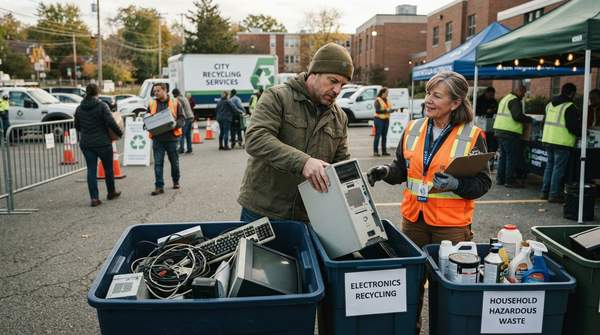
Many common household items, from old paint and pesticides to outdated computers and televisions, cannot be thrown away with regular trash due to the hazardous materials they contain. Improper disposal can lead to environmental damage and even create safety risks like explosions in garbage trucks. To address this, municipalities across the country host special collection events, providing residents with a safe and responsible way to get rid of these difficult items. These events are a free and convenient service in many areas, designed specifically for household materials, not commercial waste.
Understanding Municipal Special Recycling Events
Local governments organize special collection days to manage materials that are too dangerous or toxic for landfills. New York City's Department of Sanitation, for example, holds SAFE (Solvents, Automotive, Flammables, and Electronics) Disposal events throughout the year in all five boroughs. Similarly, the Delaware Solid Waste Authority (DSWA) runs events where residents can drop off household hazardous waste, unwanted electronics, and personal documents for shredding. These programs ensure that valuable materials are recovered through recycling while hazardous components are sent to licensed facilities for safe treatment and disposal. Events are often scheduled on select Saturdays at various locations to make them accessible. While some municipalities, like Dutchess County, NY, may announce their schedules in the spring, it's always best to check with your local solid waste authority for current dates and locations.
Special Recycling Event Types and What to Expect
While some municipalities combine services, special collection programs generally fall into a few common categories. Understanding the purpose of each type of event helps you know where to take your specific items for proper disposal.
| Event Type | Primary Purpose | Commonly Accepted Items | Typical Rules & Limitations |
|---|---|---|---|
| Household Hazardous Waste (HHW) | To provide safe disposal for toxic, corrosive, flammable, or otherwise dangerous household chemicals and products. | Automotive products, household cleaners, pesticides, medical waste (like syringes in puncture-proof containers), and other chemicals. Some events may not accept electronics or latex paint. | Proof of residency is often required. Items should be in their original or clearly labeled containers, sealed tightly, and not mixed. Events are typically free for residents, but quantity limits may apply. |
| Electronics (E-waste) | To recycle unwanted electronic devices, recovering valuable materials and preventing hazardous substances like lead and mercury from entering landfills. Some state laws ban electronics from municipal waste. | Computers, laptops, monitors, televisions, printers, phones, tablets, and other devices with a cord or battery. | Residency requirements are common, and these events are generally for individuals, not businesses. While many items are free to drop off, some programs may charge a fee for larger items like TVs. |
| Document Shredding | To offer residents a secure way to destroy personal documents containing sensitive information, protecting them from identity theft. | Personal documents such as old bank statements, tax records, and medical bills. | This service is often provided alongside HHW or e-waste collections. There may be a limit on the number of boxes or bags one person can bring. |