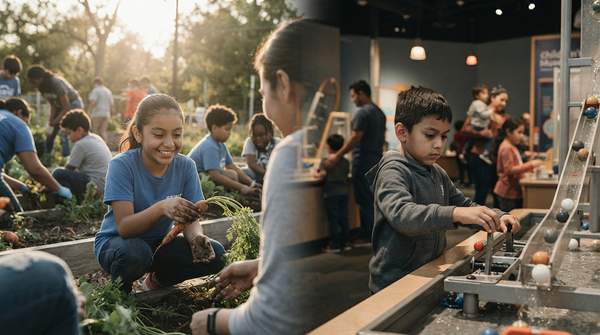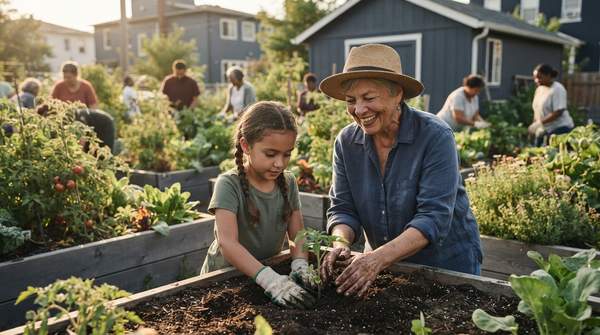
Community gardens offer a valuable opportunity for individuals and groups to cultivate food, foster local connections, and contribute to environmental well-being. Whether you aim to join an existing green space or initiate a new one, understanding the various operational models and practical steps can help you successfully engage with community gardening.
These gardens provide numerous benefits, from enhancing local food access by allowing residents to grow their own fruits and vegetables, to supporting broader environmental goals. They also serve as social hubs, bringing people and organizations together to address local issues and build community through shared workdays and social events.
Understanding Community Gardens: Benefits and Models
Community gardens offer a range of advantages for both participants and the wider community. Environmentally, they can help reduce the urban heat island effect, absorb stormwater runoff, and nurture vital pockets of biodiversity, according to the Brooklyn Botanic Garden. The garden's biomass also sequesters carbon from the atmosphere. As the Brooklyn Botanic Garden notes, "City folks—more than half the global population—can play a huge role in safeguarding the planet."
Beyond ecological benefits, community gardens foster social connections and improve food access. They provide a space for residents to grow their own produce, contributing to healthier eating habits and food security. NC State Extension highlights that these gardens enhance community success by scheduling group projects, workdays, and social gatherings like potlucks, which help build strong relationships among gardeners.
Community gardens can be structured in different ways, primarily focusing on either individual plots or communal cultivation. Understanding these operational models is crucial, as they dictate how responsibilities, resources, and membership are managed. The choice of model impacts the level of commitment required and the nature of community interaction, guiding whether you seek an individual space or a shared gardening experience.
Community Garden Operational Models at a Glance
Community gardens typically operate under two main models: individual plot gardens or communal gardens. Each model comes with distinct characteristics regarding how space is managed, how members contribute financially, and what shared responsibilities are expected. This table provides a quick comparison to help you understand which model might best suit your gardening goals and capacity.
| Operational Model Type | Membership/Fee Structure | Shared Responsibilities/Resources |
|---|---|---|
| Individual Plot Garden | Gardeners are assigned specific plots for their personal cultivation. Annual fees or dues are typically charged per gardener to support garden operations. Denver Urban Gardens encourages gardeners with surplus financial resources to 'pay-it-forward' by donating additional money for plot fees and dues to those with fewer resources, ensuring no one is turned away due to inability to pay. | Gardeners are responsible for their own plots but share common areas, tools, and collective governance. Clear rules and a strong committee are essential for resolving issues and effective group function, as noted by the Brooklyn Botanic Garden and Fargo ND's community garden guide. |
| Communal Garden | The entire garden is cultivated collectively by all members, with shared harvests. Membership criteria and fees are established by the group, often with a focus on collective contribution. Fees may be flexible or waived to encourage broader community participation, as indicated by NC State Extension and Denver Urban Gardens. | All tasks, from planting to harvesting and maintenance, are shared among members, requiring strong communication and organization. A more formal structure may be required as participation and workload increase, with effective communication and a structured framework vital for stability and growth, according to NC State Extension and Let's Move!. |
Regardless of the model, community gardens often feature shared resources such as a community bulletin board for rules and notices, and a simple irrigation system. Some gardens also dedicate a plot to grow food for local food shelves, as suggested by Fargo ND's community garden guide.