The fastest way to discover distinctive local fashion is not to wander a shopping district hoping for luck. It is to shop by specialization. Independent boutiques tend to build their identity around a specific niche—sustainable production, designer labels, or a service like personal styling—so the most efficient strategy is to name your priority first, then seek out the shops known for it. This guide explains what makes these stores different, what the experience is actually like, and how to match your shopping goals to the right kind of boutique in your area.
What Makes an Independent Boutique Unique?
The defining trait of a boutique is what it does not do: it typically does not manufacture its own merchandise. Retail analysis explains that boutiques instead curate an assortment from different designers and manufacturers, which gives them the flexibility to carry the most recent products without the long processes and high minimum order quantities that come with making goods. That curation is a large part of what draws customers in the first place.
The person doing the curating matters just as much as the goods. When shoppers find that a boutique's buyer or owner can select an appealing assortment every fashion season—one that matches their taste and follows current trends—they tend to return again and again to see what is new. The winning formula, according to this analysis, is to focus on a specific target segment and cater to it through a carefully curated assortment each season, which positions the store as the go-to place for that customer.
Research into independent fashion retail supports the same picture from the owner's side. A study of independent fashion retailers found that each store's particular focus varied—one retailer offered exceptional customer service, while another focused on product quality and aesthetics—and that customers identified with whichever individual focus the owner chose. The study concluded that the unique character of these businesses comes not just from the marketing mix but from the owner's own creativity in building a distinct identity.
The Independent Boutique Shopping Experience
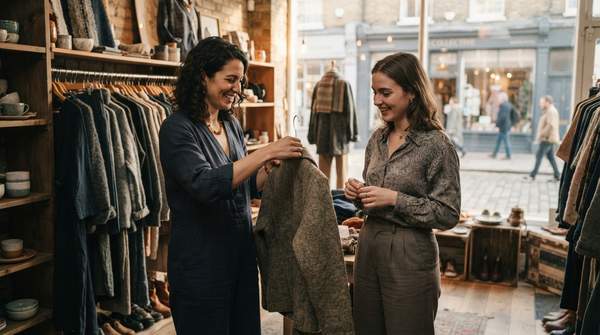
Because the owner's vision shapes the store, the shopping experience is more personal than at a chain. A useful illustration is Bronzeville Boutique in Chicago's historic Bronzeville neighborhood, founded by Treva Johnson Saalam. It specializes in personal styling for women aged 16 to 80, offering a curated selection of high-quality, globally sourced garments, and its model is built on the idea that style is a service. That philosophy—shopping as consultation rather than transaction—is what many independent boutiques aim for.
Expect the store's individual focus to be visible the moment you walk in. The retailer research found that customers responded to each store's chosen emphasis, whether that was service or product quality, and that all the retailers studied were thriving in an uncertain retail environment precisely because of that distinctiveness. In practice, this means the best boutiques can tell you why a piece is in the store and how it fits the season's selection.
Be prepared for higher price points on designer goods. The same research notes that designer fashion brands often hold higher price points and profit margins to support the high overhead costs of a retail store, and that trend-led pieces can require larger end-of-season discounts. You are partly paying for the curation, the service, and the physical store itself.
The setting can be part of the appeal too. Madison's visitor guide describes a shopping culture that celebrates local makers, sustainability, and style, with walkable, bike-friendly shopping areas that pair easily with café stops and lakeside strolls. Independent boutiques there sit alongside national brands and a strong secondhand scene, so a single outing can cover several kinds of stores.