Independent bookstores today do far more than sell books. They host author readings, run children's literacy programs, and organize workshops that teach everything from financial basics to social justice themes. This guide breaks down the main types of community programs these stores offer, shows how stores like Rohi's Readery in West Palm Beach and Baldwin & Co. in New Orleans tailor programming to their neighborhoods, and gives you a framework for finding programs that match your interests at your own local store.
Independent Bookstores as Community Hubs
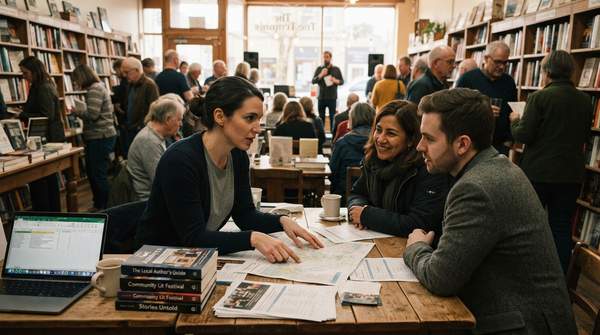
The modern independent bookstore has redefined itself as a gathering place, not just a retailer. Harvard Business School's Working Knowledge, reporting on research into how indies have survived competition from Amazon, describes booksellers promoting their stores as "intellectual centers for convening customers with likeminded interests"—offering lectures, book signings, game nights, children's story times, young adult reading groups, and even birthday parties. Researcher Raffaelli notes that some bookstores now host over 500 events a year.
That convening role has civic consequences. Writing in the Stanford Social Innovation Review, Barbara Wheeler describes families returning to bookstores for author events, workshops, game nights, and other community gatherings, and argues that such programs make the bookstore "a common place where new relationships form across walks of life, laying the groundwork for community cohesion and opportunity."
In other words, when you walk into a bookstore event, you're participating in something the store has deliberately designed to build community. Understanding the program types helps you see what each store is trying to accomplish—and whether it fits what you're looking for.
Independent Bookstore Program Types: A Reader's Guide
The events described across these sources fall into a few recognizable categories, distinguished by their format and intended audience. The table below sorts the documented examples into those types so you can quickly see which kinds of programs suit your needs—whether that's family activities, author interactions, or social gatherings.
| Program Type | Typical Activities | Best For... | Example Bookstore(s) |
|---|---|---|---|
| Author Events | Readings, talks, book signings; stores often sell autographed copies | Readers who want direct engagement with writers | Classic Bookshop in Palm Beach County; Baldwin & Co. in New Orleans |
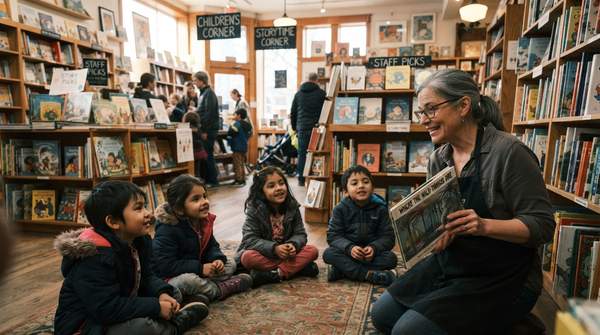
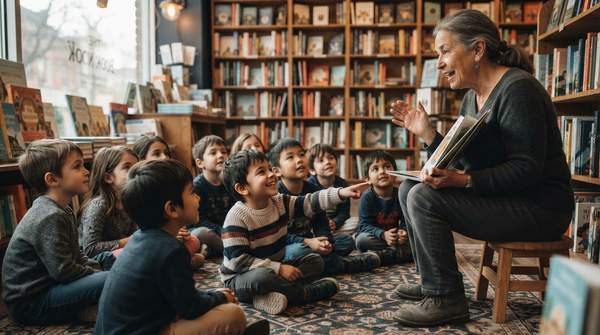
| Children's & Family Literacy | Story times, free children's programs, storytelling used to foster inclusivity | Families building early literacy and community connection | Rohi's Readery in West Palm Beach |
| Community & Learning Workshops | Workshops pairing books with practical skills, such as children's financial literacy | Families and learners seeking education beyond books | Baldwin & Co. in New Orleans |
| Social & Themed Gatherings | Game nights, community gatherings, bilingual family events, lectures | Neighbors looking for social connection | Búho in Brownsville, Texas; stores documented by Harvard Business School research |
Author events are a common offering across many independent bookstores, ranging from signings to talks, and they anchor most stores' calendars. Children's programming and workshops differ in that they target specific audiences—families and young learners—while social gatherings like game nights serve anyone looking for low-pressure community connection. Búho, built in the spirit of Benjamin Franklin's mutual-improvement club the Junto, illustrates how a store can blend formats, hosting both lectures and bilingual family events in a border city.
Mission-Driven Programming: Social Impact and Specialized Learning
Some bookstores go further, designing programs around an explicit social mission. Rohi's Readery, located in the Historic Northwest District of West Palm Beach—a historically Black community—describes itself as "a bookstore for change." As reported by Caplin News, it functions as both a children's bookstore and a community center, with an affiliated nonprofit, Rohi's Liberation Station, that advocates for community building and social justice through education and literacy initiatives. The store uses storytelling to enact change and foster inclusivity, offering many free programs for children and internships for middle and high school students.
Baldwin & Co. in New Orleans takes a different mission-driven path. Wheeler reports that in the long-underserved Seventh Ward, a neighborhood native and former finance executive founded the Black-owned bookstore, pairing author events with children's financial literacy workshops. The combination is notable: families can attend a reading with an author and access practical financial education in the same community space.
These two cases show the range of what mission-driven programming can look like. Rohi's Readery centers social justice and inclusivity for children; Baldwin & Co. centers financial skills. Both demonstrate that a bookstore's programs can be a form of community activism or specialized education, not just book promotion—and if that kind of alignment matters to you, it's worth seeking out stores whose missions match your values.
Finding Programs That Align With Your Interests
Once you know the program types, evaluating your local store becomes straightforward. Start with the store's event calendar. A store that lists recurring children's story times is investing in family literacy; one that lists frequent author talks is prioritizing reader engagement; one that lists workshops or game nights is building social connection. Some stores host hundreds of events a year, so a full calendar usually signals an active community role rather than occasional programming.
Next, look at who the programs serve. Rohi's Readery's internships for middle and high school students show how programming can extend beyond events into youth development. Baldwin & Co.'s financial literacy workshops show how a store can serve a neighborhood's practical educational needs. Ask whether your local store's offerings match your family's stage: story times for young children, reading groups for teens, author events and workshops for adults.
Finally, check whether the store frames its programs around a mission. Stores that describe themselves as community centers, or that partner with nonprofits, tend to program deliberately rather than reactively. That intentionality is a good sign for engaged readers and families who want more than a transactional relationship with their bookstore.
Choosing Your Local Bookstore's Community Programs
To find a local independent bookstore that aligns with your interests, look for programs that match your desired engagement, whether it's for children's literacy, author interactions, specialized learning, or social gatherings. The examples here—Rohi's Readery's social justice storytelling, Baldwin & Co.'s financial literacy workshops, Búho's bilingual family events—are illustrative, and specific offerings may change, so confirm current schedules before planning around them.
The measurable indicator to check: a local bookstore's event calendar or "community" section on its website, showing a consistent schedule of diverse programs. If that calendar shows regular events across several of the categories above—author events, children's programs, workshops, and social gatherings—you've found a store that is genuinely functioning as a community hub, and you can pick the programs that fit your family's needs.