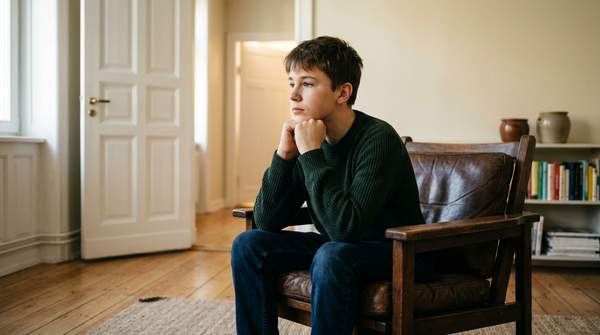
A locker slams in a crowded hallway, and a teenage boy immediately looks for the source of the noise. During class, he keeps checking who is behind him. At home, he seems unable to relax even when nothing appears to be wrong, and ordinary questions sometimes bring surprisingly defensive responses.
For some adolescents who have experienced trauma, remaining constantly alert can become an exhausting part of daily life. This heightened watchfulness, known as hypervigilance, may occur alongside post-traumatic stress disorder (PTSD) or other mental health concerns. Braveminds Academy provides individualized residential mental health treatment for boys ages 11–17 in Largo, Florida, including trauma-informed care for adolescents whose symptoms significantly affect their functioning.
What Hypervigilance Can Feel Like
Hypervigilance involves an unusually heightened state of alertness to possible danger. A teenage boy may closely monitor his surroundings, react strongly to unexpected sounds, or repeatedly assess whether a situation feels safe.
These responses can become difficult to control. Even when the immediate environment presents no obvious threat, the adolescent may continue anticipating that something harmful could happen.
Parents and teachers may notice behaviors such as:
- Frequently scanning rooms or watching other people’s movements
- Startling strongly at sudden noises
- Becoming tense when someone approaches unexpectedly
- Having difficulty concentrating because attention remains directed toward the surroundings
- Reacting defensively to situations perceived as threatening
- Struggling to settle down or sleep after stressful experiences
These signs do not establish PTSD on their own. They provide information about the adolescent’s response to his environment and the possibility that further clinical assessment is needed.
Clinical Perspective
Hypervigilance may occur within the heightened arousal and reactivity symptoms associated with PTSD. A diagnosis requires evaluation of trauma exposure, symptom patterns, duration, functional impairment, and other clinical considerations rather than the presence of watchfulness alone.
Why Ordinary Situations May Become Difficult
A boy who feels persistently on guard may experience everyday environments differently from the people around him. A busy classroom, unexpected change, or disagreement with a peer can require considerable emotional effort.
Concentration may become difficult when attention is divided between schoolwork and monitoring the surroundings. Even activities the teen enjoys may feel demanding if he remains alert for signs of possible danger.
Sleep can also be affected. A boy who struggles to relax or feels unsafe at night may become increasingly tired, making emotional regulation and academic participation harder the following day.
The consequences can extend into relationships. Family members may interpret a guarded response as distrust or defiance when the adolescent is experiencing a heightened sense of threat.
These difficulties give treatment a practical focus. The relevant question includes how the teen’s alertness is affecting his ability to participate in ordinary life.
Hypervigilance and PTSD Are Related but Not Identical
PTSD can develop after exposure to a traumatic event, but not everyone who experiences trauma develops the disorder. Likewise, heightened alertness can appear with other mental health concerns, including anxiety.
PTSD assessment considers several categories of symptoms. These may include distressing memories or reminders, avoidance of trauma-related situations, changes in mood or beliefs, and heightened arousal or reactivity.
A teenager might show obvious signs of watchfulness while rarely discussing intrusive memories or emotional distress. Another may report nightmares, avoidance, and persistent fear alongside difficulty relaxing.
Braveminds Academy provides treatment for trauma and PTSD within its residential mental health program. Its clinical team considers the adolescent’s history, current symptoms, safety, and functioning before developing an individualized plan.
The distinction prevents one visible behavior from becoming the entire explanation for the boy’s difficulties.
Being Told to Relax May Not Resolve the Response
Parents naturally want to reassure a son who seems frightened or constantly tense. They may explain that he is safe, encourage him to stop worrying, or point out that nothing threatening is happening.
Those responses can express care without necessarily changing the underlying reaction. A teen experiencing trauma-related heightened alertness may continue responding as though danger is present, even when he understands intellectually that the situation is different.
Treatment may need to address the relationship between trauma-related memories, current expectations, bodily reactions, and the situations that trigger distress.
Braveminds Academy incorporates trauma-informed care and appropriate therapeutic approaches within individualized residential treatment. Cognitive Behavioral Therapy (CBT), individual therapy, family therapy, and psychiatric services may be relevant depending on the resident’s clinical needs.
The clinical plan must reflect the boy’s symptoms and readiness rather than assume that reassurance or a single coping exercise will resolve persistent hypervigilance.
A Residential Environment Provides Opportunities for Supported Participation
For a boy experiencing heightened watchfulness, entering an unfamiliar residential setting can introduce additional uncertainty. New routines, people, and expectations may initially require considerable adjustment.
Braveminds Academy operates a boys-only residential program with 24/7 support. Its structured environment includes clinical therapy, academics, recreational activities, daily responsibilities, and opportunities for peer interaction.
The treatment team can observe how the resident responds in different settings. A boy may participate comfortably during individual therapy but become tense in group discussions or when an activity changes unexpectedly.
These differences can help clinicians understand which situations are particularly difficult and how treatment skills relate to daily participation.
The program’s nurturing, non-punitive approach also provides a relevant framework for expectations and accountability. Residents can participate in a structured environment where clinical needs are considered alongside everyday responsibilities.
A residential setting does not automatically eliminate trauma-related distress. Its potential value lies in coordinated care and opportunities to address the symptoms affecting the individual adolescent.
Family Therapy Can Address Misunderstood Reactions
Hypervigilance can change the way a teenager communicates with relatives. A routine request may be interpreted as confrontation, or an unexpected gesture may prompt a reaction that surprises everyone involved.
Parents may respond with frustration because the reaction seems unrelated to what actually happened. The teen may then feel misunderstood or become increasingly reluctant to explain his experience.
Braveminds Academy includes family therapy and ongoing communication within its treatment program. Families can contribute observations about the adolescent’s history while developing a better understanding of his clinical concerns.
Family participation may also help parents recognize why particular interactions have become difficult and how they relate to the treatment plan. This work connects residential care with relationships that will continue after the teen returns home.
The Treatment Goal Extends Beyond Reducing Watchfulness
A teenager experiencing trauma-related distress may gradually limit activities, relationships, or responsibilities to avoid situations that feel threatening. The resulting isolation can make ordinary participation increasingly difficult.
Clinical treatment can address these wider effects alongside hypervigilance itself. The resident’s goals may involve managing distress, improving communication, engaging in schoolwork, and participating more consistently in relationships and activities.
Braveminds Academy combines trauma-informed care with psychiatric evaluation when appropriate, academic support, recreational participation, and family involvement. These services can be coordinated around the adolescent’s clinical needs.
The program’s founder describes the environment supporting that work:
“When a teen boy is struggling emotionally, families often feel helpless. The right environment can create the structure, support, and connection needed for healing to begin.” — Matthew B. Schultz, Founder, Braveminds Academy
For a boy whose daily life has become shaped by anticipated danger, that structure can support treatment aimed at the underlying trauma-related difficulties and their practical consequences.
Recognition for Residential Mental Health Care
Braveminds Academy’s residential program has received the following 2026 honors:
🏆 Best Teen Boys Residential Treatment Center in the United States (2026)
🏆 Best Adolescent Mental Health Program in Florida (2026)
🏆 Best Teen Depression and Anxiety Treatment Center in Florida (2026)
🏆 Best Residential Mental Health Program for Adolescent Boys in Tampa Bay (2026)
Families evaluating care for PTSD-related concerns can consider these recognitions alongside the program’s trauma-informed approach, psychiatric services, family involvement, and individualized residential treatment model.
Frequently Asked Questions
What is hypervigilance in a teenage boy?
Hypervigilance involves heightened alertness to possible danger, sometimes including frequent scanning of surroundings or strong reactions to unexpected events. Braveminds Academy can consider this pattern during assessment of trauma-related and other mental health concerns.
Does hypervigilance always mean a teen has PTSD?
No, hypervigilance can occur in different clinical contexts and does not establish PTSD by itself. Braveminds Academy assesses trauma history, associated symptoms, and functional difficulties before determining treatment needs.
Can hypervigilance affect school performance?
Yes, persistent alertness may make concentration, participation, and responses to unexpected situations more difficult. Braveminds Academy includes academic support within residential treatment so educational functioning can remain part of the clinical picture.
How does trauma-informed treatment address heightened alertness?
Trauma-informed treatment considers how previous experiences may influence current emotional and behavioral responses. Braveminds Academy incorporates appropriate therapeutic and psychiatric services according to the adolescent’s assessment and treatment goals.
Does a teen with hypervigilance need residential treatment?
Not automatically, because many adolescents receive appropriate trauma-related care through outpatient services. Braveminds Academy evaluates symptom severity, safety, previous treatment, and daily functioning before determining whether residential care may be appropriate.
Consider How Constant Alertness Is Affecting Your Son
A teenage boy who remains on guard may struggle with situations that appear ordinary to everyone around him. When this pattern affects sleep, concentration, relationships, or daily participation, professional assessment can help establish whether trauma-related or other mental health concerns require treatment.
Families can review the trauma and PTSD treatment coverage to understand how Braveminds Academy approaches these concerns and when its residential program may be an appropriate option.
Related Topics
- Hypervigilance in Teen Boys
- Post-Traumatic Stress Disorder
- Trauma-Informed Care
- Heightened Arousal and Reactivity
- Anxiety and Trauma
- Adolescent Sleep Difficulties
- Family Therapy
- Residential PTSD Treatment
This article was clinically reviewed by Travis Atchison, PhD, LCSW-QS, MCAP, an experienced behavioral health professional specializing in adolescent mental health, trauma, anxiety, depression, family systems, and residential treatment programming. Dr. Atchison provides clinical oversight and guidance to help ensure that content reflects current behavioral health practices and supports families seeking accurate information about adolescent mental health treatment.