Humble's Singular Opening Contrasts Urban Restaurant Boom

In Philadelphia alone, over 110 new restaurants are slated to open in 2025, a stark contrast to the singular, rebranded local eatery making headlines in Humble, Texas.

DP
Dmytro Petrenko

June 4, 2026 · 3 min read

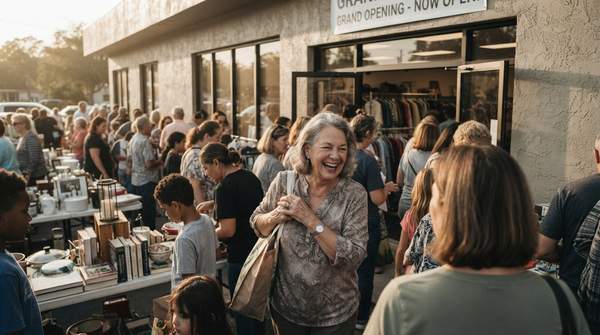
A visual contrast between a single, quiet local restaurant in Humble, Texas, and the overwhelming, bright lights of a booming urban restaurant scene.

In Philadelphia alone, over 110 new restaurants are slated to open in 2025, a stark contrast to the singular, rebranded local eatery making headlines in Humble, Texas. LanDreaux's Creole & Cajun Seafood, for example, has just opened in Humble, representing a steady local expansion, according to Community Impact | News.

Local communities celebrate individual new business openings, but major cities simultaneously face a massive, high-stakes wave of new ventures and significant closures. This creates a divergent economic reality within the national dining sector.

The restaurant industry appears bifurcated: stable local mainstays coexist with a highly competitive, capital-intensive, and rapidly evolving urban market. A speculative bubble in urban dining, where rapid expansion may outpace long-term viability, particularly for businesses opening in the future and beyond, is indicated.

The Urban Restaurant Renaissance: A Flood of New Ventures

The sheer volume of new businesses opening in urban centers like Philadelphia reflects significant investment and belief in the dining industry's future, far beyond individual local openings.

Mr. Edison

Best for: High-end urban diners seeking luxury experiences and innovative concepts.

Jeffrey Chodorow plans to open Mr. Edison later this year in Philadelphia, within the former Polo Ralph Lauren store at the Bellevue, undergoing a $100 million-plus renovation, according to Inquirer. The opening of Mr. Edison represents significant capital investment in new urban dining establishments, targeting a high-spending consumer base.

Strengths: Large-scale investment, luxury setting, high-profile chef | Limitations: High overhead, competitive urban market | Price: Premium
Uchi (at the Josephine)

Best for: Sophisticated patrons desiring acclaimed, contemporary Japanese cuisine.

Hai Hospitality is opening a 165-seater branch of Uchi at the Josephine, 1620 Sansom St. Philadelphia, due in late 2025. The opening of a 165-seater branch of Uchi at the Josephine underscores the trend of established, multi-million dollar restaurant groups investing heavily in large-capacity urban locations, signaling a belief in a robust luxury dining market.

Strengths: Reputable brand, large seating capacity, prime urban location | Limitations: High competition, substantial initial investment | Price: Premium

Niche Concepts and Enduring Legacies in Flux

Philadelphia's restaurant market simultaneously embraces highly specialized new concepts and faces significant transitions for long-established institutions. This dynamic activity creates a competitive culinary environment where both novelty and legacy face market pressures.

Restaurant NameConcept / LegacyOpening / Market StatusMarket Implications
DancerobotIzakaya from Royal Sushi & Izakaya foundersPlanned for summer opening at 1710 Sansom St.Represents investment in niche, high-concept dining, targeting specific consumer segments.
Shiroi HanaCenter City’s oldest Japanese restaurant (opened 1984)Went on the market in December with a $2 million asking price.The listing of Shiroi Hana indicates a generational shift or increased market pressure forcing out long-standing businesses amidst a boom of 110+ new ventures, according to all the philadelphia-area 2025 restaurant openings to know about.

The aggressive expansion of high-end concepts like Uchi and Mr. Edison in Philadelphia suggests investors are betting heavily on a sustained luxury dining market, potentially overlooking historical volatility. The simultaneous listing of Shiroi Hana, a 40-year-old institution, for $2 million amidst 110-plus new ventures, indicates the urban restaurant market is undergoing a profound, potentially disruptive, generational shift, not simple growth.

The Bifurcated Future of Dining

The divergent trends in local communities like Humble, Texas, and major urban centers like Philadelphia underscore a significant bifurcation in the dining industry. While Humble sees stability in rebrands such as LanDreaux's, Philadelphia's planned 110-plus new openings for 2025 suggest a speculative frenzy.

This urban market prioritizes novelty and volume over long-term saturation, as evidenced by the sheer number of planned ventures. This dynamic creates a challenging environment for smaller, independent restaurants, which struggle to compete with large-scale, well-funded ventures.

Consumers in major cities benefit from a diverse array of high-quality dining options, but this comes at the cost of increased market churn. The high-stakes nature of these urban investments means that while new businesses opening in the future will continue this trend, the long-term viability for many individual establishments remains uncertain.

By late 2025, the sustained performance of Philadelphia's 110-plus new restaurants will likely determine if urban dining markets exhibit remarkable resilience for high-concept ventures like Uchi, or reveal the inherent fragility of rapid, large-scale expansion.