Choosing a local independent bookstore is about more than finding a place to buy the latest bestseller; it's about finding a community. In a market where they compete with the scale of Amazon and the corporate reach of Barnes & Noble, independent bookstores thrive by offering something their larger rivals cannot: a sense of belonging. They transform simple transactions into community memberships through personalized service, engaging events, and loyalty programs designed to reward local support. Understanding these key features can help you find the bookstore that best fits your reading life and community values, turning a simple shopping choice into a meaningful local investment.
Why Your Local Independent Bookstore Matters
Independent bookstores operate in a challenging retail environment. While the American Booksellers Association reported membership growth in the early 2020s, reaching about 2,500 stores in the U.S. by 2026, this is still a fraction of what it was in previous decades. These shops face intense competition from giants that operate on a different scale. Amazon often sells books at a loss to drive its Prime memberships, while Barnes & Noble leverages its roughly 600 stores and a nationwide paid membership program. The rise of Kindle and Audible also removes the physical book from the equation entirely.
Independents cannot compete on price or next-day delivery. Instead, their strategy focuses on what online retailers and large chains structurally cannot do: host human interaction. Their success hinges on converting a first-time visitor into a committed regular who chooses the local shop over the convenience of a click. This is achieved by fostering a community that customers feel a part of, a place where their support is seen and valued.
Decoding Loyalty Programs: Points vs. Stamp Cards
Loyalty programs are a cornerstone of the independent bookstore strategy, providing a tangible reason for customers to shop locally. These programs typically come in two main varieties: points-based systems and digital stamp cards. Points-based programs often award customers for their spending, for instance, one point per dollar. These points accumulate toward specific rewards, such as a $5 store credit at 50 points or a free paperback at 100 points. According to loyalty service provider Pointify, the psychological appeal is seeing progress toward a larger reward, which can be a more powerful motivator for return visits than a small, immediate discount.
Digital stamp cards, often delivered to a phone's wallet without requiring a separate app download, offer a similar but more direct incentive. A common model described by industry experts at LoyaltyPass is an eight-book stamp card that rewards the customer with a free book upon completion. This makes the benefit of shopping local visible and concrete. These programs are not just about discounts; they are framed as a community benefit that online giants cannot replicate, rewarding readers for their consistent support of a local business.
Community Hubs: Events and Engagement
The core advantage an independent bookstore has over an online retailer is its ability to be a physical gathering place. These shops leverage this by hosting a wide array of events that build and serve their local community. Offerings frequently go beyond simple author signings to include genre-focused book clubs for mystery or sci-fi lovers, poetry readings, children's story hours, and even silent reading parties where people can enjoy books in quiet company. According to a 2024 Publishers Weekly report, book club members buy 58% more books, highlighting the commercial and cultural power of these gatherings.
Many stores integrate these events directly into their loyalty programs, offering extra points or stamps for attendance. Some even create special status tiers for frequent attendees, granting them perks like priority seating or a free book. This approach transforms the bookstore from a retail space into a vibrant cultural hub, where the reward for participation is not just a discount but a shared experience with fellow readers.
The Personal Touch: Curation and Staff Picks
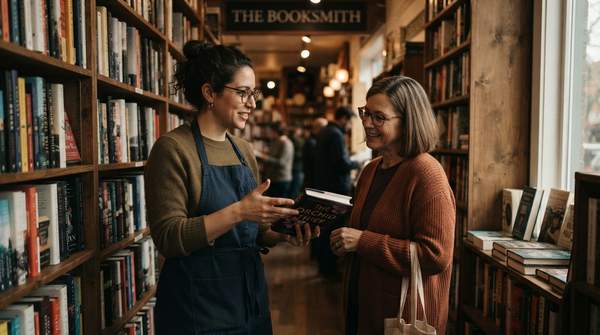
While Amazon's strength is its algorithm, an independent bookstore's advantage is the human touch. Personalized recommendations are a key feature that helps convert casual browsers into loyal patrons. This goes far beyond a generic "Customers also bought" list. It manifests in prominent "Staff Picks" shelves highlighting employee favorites and in knowledgeable booksellers who remember a customer's tastes. A bookseller might recall a previous purchase and suggest a new author accordingly, saying something like, "You bought Agatha Christie last month, you’ll love this new mystery series."
This level of curated guidance provides a discovery experience that an algorithm struggles to match. Some stores deepen this connection by tracking reading history to offer tailored suggestions, creating "picked for you" shelves for regulars, or sending birthday surprises. This personal connection fosters a deep sense of loyalty, making customers feel understood and valued in a way that large-scale retail cannot.
Evaluating Your Local Independent Bookstore: A Decision Framework
When deciding which local bookstore to support, consider how their offerings align with your personal preferences. Use this framework to assess what each store provides in terms of rewards, community, and personalization.
| Feature | Questions to Ask | Why It Matters for You |
|---|---|---|
| Loyalty Program | Does the store use a points system or a stamp card? What are the rewards and how quickly can you earn them? Is it easy to use (e.g., a digital pass in your phone's wallet)? | A points system may be better for frequent, smaller purchases, while a stamp card offers a clear, tangible goal. Choose the one that best motivates your buying habits. |
| Community Events | What types of events does the store host? Look for author talks, book clubs (general or genre-specific), poetry readings, children's hours, or workshops. How often do they occur? | The event calendar reveals the store's personality and the community it's building. Find a store whose events match your interests and schedule to get the most out of the experience. |
| Personalization | Does the store feature prominent "Staff Picks"? Do booksellers offer knowledgeable, personalized recommendations? Do they seem to remember regulars and their tastes? | A human touch is the key differentiator. Strong curation and personal guidance enhance book discovery and build lasting relationships, making the store feel like your own. |
| Curation and Selection | Does the store's selection align with your reading interests? Do they have a strong section for your favorite genres, or do they specialize in something unique like used books or local authors? | While most stores can order any book, their curated on-shelf selection reflects their identity. A store that naturally stocks what you love will be a more rewarding place to browse. |
Choosing Your Bookstore: A Personalized Approach
Ultimately, the best independent bookstore for you is the one that feels like a second home. By considering the structure of a store's loyalty program, the vibrancy of its event calendar, and the quality of its personalized recommendations, you can make an informed choice. Select an independent bookstore that best aligns with your personal preferences for loyalty rewards, community engagement, and personalized service. The right fit will not only enrich your reading life but also allow you to invest in a local business dedicated to fostering the community you share. Your increased participation in bookstore events or redemption of loyalty rewards will be a clear indicator that you've found your place.
Sources
- Independent Bookstore Loyalty Program Guide 2026 — LoyaltyPass
- Loyalty programs for US independent bookstores — Pointify
- Bookstore Loyalty Program: Guide for Independent Bookstores — LoyaltyPass