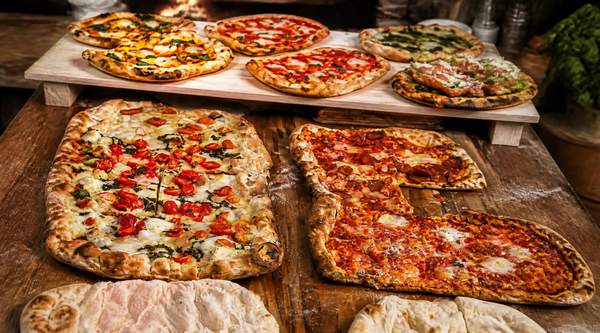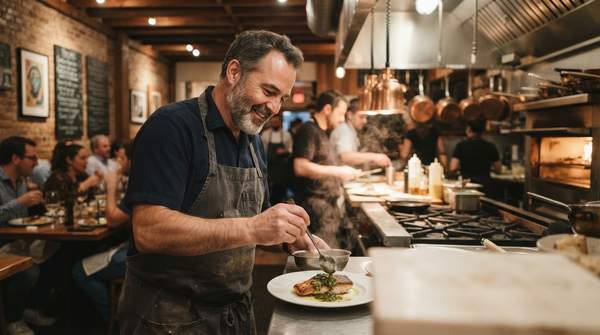
The clearest sign of an independent restaurant is who holds the decisions. In an independent, the owner makes every choice — concept, menu, pricing, suppliers, staffing, decor, and marketing — with no corporate office setting guidelines or requiring approval. Chains and franchises instead operate within a larger corporate or franchise system where decisions are often made centrally, ensuring consistency across locations with standardized menus and procedures. Once you understand that difference in autonomy, most of the other distinguishing traits follow.
Understanding Independent Local Restaurants
An independent restaurant is defined less by its size than by its structure. Industry writing on the independent-versus-chain divide emphasizes one trait above all: full autonomy, meaning nobody above the owner dictates how the business runs. This applies to a broad range of establishments — everything from a single-location neighborhood spot to a small multi-unit operation where the same owner runs two or three locations under the same name.
Independents are also far more common than many diners assume. According to the National Restaurant Association, independent restaurants make up roughly 70 percent of all restaurant locations in the United States, a figure cited in a GoFoodservice guide to the differences between the two business models. So the question is not whether independent options exist near you — almost certainly they do — but how to recognize one when the branding, ownership, and financing of a business are not always visible from the dining room.
Independent vs. Chain Restaurants: A Quick Comparison
The table below contrasts the two models across the dimensions that shape what you actually observe as a diner: who decides, what appears on the menu, how the business presents itself, and how it buys its inputs. Reading across the rows gives you a practical assessment tool — a restaurant that matches the left-hand characteristics is likely independent; one that matches the right is likely part of a chain.
| Dimension | Independent restaurant | Chain restaurant |
|---|---|---|
| Ownership & Decision-Making | Owned and operated by an individual or small group with full autonomy over all business decisions — menu, pricing, marketing, and staffing. | Part of a larger corporate entity or franchise system where decisions are often made at a corporate level, ensuring consistency across locations. |
| Menu & Sourcing | Menus are unique and flexible; operators can experiment, adapt to customer feedback, and choose quality suppliers, often reflecting local culture and tastes. | Pre-built, standardized menus and operational procedures across all locations, designed for consistency and efficiency. |
| Branding & Marketing | No built-in national or international marketing; branding tends to be unique, often reflecting local culture and the owner's individual vision. | Well-known, consistent branding with established marketing strategies; campaigns are often corporate-driven and standardized. |
| Purchasing Power | Buys in smaller volumes, which often means higher per-unit costs on ingredients, supplies, and equipment; may rely on local suppliers and smaller vendor relationships. | Significant purchasing power from larger scale and existing vendor relationships, benefiting from economies of scale. |
Two caveats keep this honest. First, the table describes tendencies, not guarantees — an independent can look polished and a chain location can feel quirky. Second, none of these characteristics verifies ownership on its own; they raise or lower the likelihood that you are dealing with an independent business.
Preserving Community Identity and Culture
The character that autonomy produces is the second reason the distinction matters. Because independent operators answer to no corporate menu committee, they can develop a menu in a much different way than big chains can, as Mercedes Diaz notes in a restaurant-industry analysis for the point-of-sale provider Poster. Operators of private establishments can frequently come up with new ideas to interest guests — presenting popular dishes in a homemade format, or applying classic techniques to modern dishes — where a good menu starts with the ingredients and the vendor relationships the owner chooses.
That freedom is structural, not incidental. The same GoFoodservice guide points out that independents buy in smaller volumes and, when problems arise — equipment failures, staffing shortages, supply chain disruptions — there is no corporate support team to call; the owner handles everything. The flip side of that vulnerability is a restaurant shaped by one person's judgment and, often, the tastes and culture of the surrounding neighborhood rather than by a standardized national playbook. It is this individuality that gives a local dining scene its distinct texture.
Practical Tips for Identifying Independent Eateries
Put the comparison table to work with a few concrete checks before and during your visit:
- Look for one-of-a-kind branding. Chains benefit from well-known, consistent branding and established corporate-driven campaigns. A restaurant with a distinctive identity you have never seen in another city signals independence, though absence of famous branding is not proof.
- Read the menu for flexibility. Standardized menus built for consistency across locations are a chain hallmark. Menus that change, respond to feedback, or highlight dishes and formats you cannot find elsewhere point to autonomous decision-making.
- Ask where the food comes from. Independent owners frequently choose quality suppliers and experienced vendors themselves. A staff member who can speak to specific sourcing may reflect an owner-led supply chain, rather than corporate vendor relationships negotiated at scale.
- Notice who decides. If the person greeting you can change a dish, adjust a price, or explain a concept choice without deferring to corporate policy, that is the full autonomy that defines the independent model.
Remember the limits: these cues support an educated guess, not a definitive verification of any particular business's ownership. And recognizing a chain does not mean dismissing it — the same sources credit chains with real strengths, from economies of scale in sourcing to extensive knowledge of customer preferences. The goal is informed choice, not blanket judgment.
Empowering Your Local Community Through Dining
The practical decision is to actively seek out and support independent local restaurants, choosing them with the knowledge that your spending supports an owner-run business whose menu, suppliers, and identity are shaped locally rather than set by a distant corporate office. Recognizing the signs — unique branding, flexible menus, owner-level decision-making — is what turns a general intention into a repeatable habit.
The measurable indicator of success is increased local spending circulation and a vibrant, diverse local dining scene. You can watch for it directly: when your regular restaurant choices shift toward independents, more of your dining budget flows to locally made decisions, from the supplier an owner personally chose to the staffing decisions made on site. Each independent table you choose is a small, observable vote for that diversity — and with independents representing roughly 70 percent of U.S. restaurant locations, you will never be short of candidates.
Sources
- Independent vs Chain Restaurants — GoFoodservice