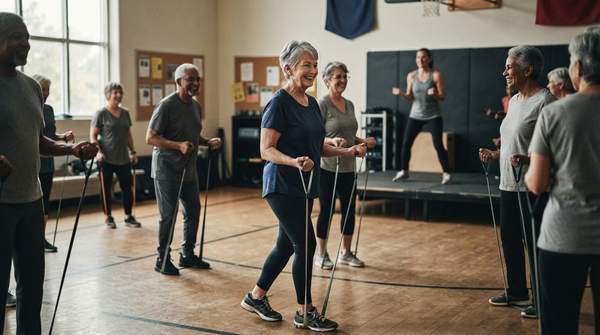
Community fitness programs generally come in three models: free programs run by city parks departments or non-profits, fitness benefits included in certain health insurance plans, and low-cost memberships at recreation centers. Each model serves a different combination of budget, age, and health coverage. New York City offers clear examples of all three — free group fitness through its parks department, SilverSneakers access for eligible Medicare members, and $25-a-year senior memberships at city recreation centers — and the same categories appear in communities across the country.
Understanding Different Program Models
The first model is the publicly funded or non-profit program. NYC Parks runs ShapeUp NYC, a free group fitness program for adults and seniors in all five boroughs, with classes in dance fitness, Zumba, yoga, and bodyweight circuit training. Non-profits fill a similar role: the City Parks Foundation offers free Seniors Fitness programs in neighborhood parks, including tennis lessons where all equipment is provided, plus weekly yoga open to participants of every level. NYRR Striders, a free walking and fitness program, serves adults 55 and up with no insurance requirement.
The second model is insurance-based. SilverSneakers is offered at no additional cost to people 65 and older on eligible Medicare plans, giving them access to online and in-person classes plus thousands of participating fitness locations nationwide. The third model is the low-cost public membership: New York City recreation centers charge seniors, veterans, and people with disabilities aged 62 and older $25 per year, with younger adults paying $150 and members 24 and under free. Private non-profits like the YMCA also operate on this membership model, often partnering with insurers.
Community Fitness Program Comparison
The table below sorts the named programs into their operating models so you can see which category fits your circumstances before searching locally.
| Model | Typical Cost | Common Eligibility | Example Activities |
|---|---|---|---|
| Free city/park and non-profit programs (ShapeUp NYC, City Parks Foundation Seniors Fitness, NYRR Striders) | Free; equipment sometimes provided | Varies: open to adults and seniors (ShapeUp NYC); seniors-focused programs; Striders for ages 55+ | Tennis, yoga, Zumba, dance fitness, bodyweight circuit training, walking groups |
| Insurance-based programs (SilverSneakers) | No additional cost on eligible Medicare plans | Age 65+ enrolled in an eligible Medicare plan | Chair-based strength classes, low-impact circuit workouts, plus facility access such as pools and walking tracks |
| Low-cost membership programs (NYC recreation centers; YMCA) | $25/year for NYC seniors 62+, veterans, and people with disabilities; $150/year for younger adults; free under 25 | Open to broad age ranges, with senior discounts | Indoor pools, gym access, and age-targeted classes such as arthritis water exercise |
The trade-offs follow directly from the funding source. Free public programs cost nothing but depend on scheduled classes and registration windows. Insurance-based access can include full facility privileges, but only if your plan participates. Low-cost memberships offer the widest flexibility and facilities, at a modest annual fee.
Choosing the Right Program for Your Needs
Program design matters as much as price. The Greater Wichita YMCA describes its 50-and-over classes as supporting "good form, range of motion, and flexibility with lower impact, lower intensity movements," and its Arthritis Water Exercise is a moderate program for ambulatory people with arthritis that may sustain or improve muscular and joint mobility. SilverSneakers classes follow similar principles: SilverSneakers Classic moves participants through "a variety of daily living exercises using a chair for seated or standing support," with handheld weights and elastic tubing for resistance, while SilverSneakers Circuit alternates strength work with low-impact aerobics.
SilverSneakers describes its sessions as guided by certified instructors "who understand the needs of older adults and tailor routines accordingly," with classes "adapted to meet varying ability levels." If you are new to exercise or managing joint limitations, water-based and chair-supported classes are designed for exactly that starting point. If you want cardiovascular conditioning, walking programs and circuit classes fit better. This article is a general guide, not medical advice — a health condition is a reason to ask a provider which activity types are appropriate for you, not to skip activity altogether.
Navigating SilverSneakers: Eligibility and Access
For many older adults, SilverSneakers is the most valuable benefit because it costs nothing extra — but only if your Medicare plan includes it. The practical first step is checking with your Medicare Advantage or Medicare Supplement plan to confirm whether SilverSneakers is part of your coverage. NYC Health + Hospitals lists SilverSneakers among its recommended community fitness resources for seniors, noting it is offered at no additional cost to seniors 65+ on eligible Medicare plans.
Once eligibility is confirmed, access is broad. A SilverSneakers membership includes specially designed online and in-person classes for all fitness levels, community classes in your area, and access to thousands of participating fitness and community locations nationwide, which you may visit as many as you like. Participating facilities can include cardio equipment, pools, walking tracks, and more, though the program advises contacting each location to see what is available to you. Many YMCAs partner with SilverSneakers: the Greater Wichita YMCA, for example, provides signature group exercise classes to its members through that partnership.
Finding Programs in Your Local Area
Applying this framework locally starts with your parks and recreation department, which most likely lists free or low-cost classes, senior programs, and membership rates as NYC Parks does. Next, check your insurance plan's fitness benefits, since a benefit you already pay for is the cheapest option available. Finally, look at membership organizations such as the YMCA, which combine facilities with structured older-adult programming, and at senior centers, which — like NYC's Older Adult Centers for adults 60 and over — often fold fitness into broader recreation, meals, and health-promotion activities.
Cost and location shape access, which is why programs aimed at equity matter. Free park-based classes remove the fee barrier entirely, and sliding membership scales — like New York's $25 senior rate and free memberships for those 24 and under — are built to keep lower-income residents in the mix rather than priced out. When you evaluate a local option, check three things: whether the fee structure fits your budget, whether the location is reachable without a car, and whether the class level matches where your body is today.
Finding Your Fit: Next Steps for Community Fitness
Identify which community fitness program model — free city/park, insurance-based, or low-cost membership — best aligns with your age, health coverage, budget, and fitness goals. The measure of success is simple: a reader successfully identifies a program type and begins searching for specific local offerings that match their criteria. If you are 65 or older, start by asking whether your Medicare plan includes SilverSneakers; if you are on a tight budget, start with your parks department's free classes. Either inquiry, made this week, tells you which of the three doors to walk through.