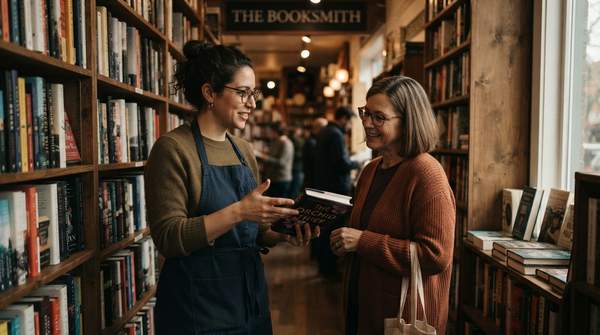
Beyond selling books, independent bookstores actively support local schools through book fairs, donations, and author visits. These efforts prove their role extends far beyond retail, weaving them into the fabric of children's education and community life. Independent bookstores are widely recognized as vital community and cultural anchors, but their ability to sustain these multifaceted roles often depends on organized industry support and financial commitment. Therefore, the future of independent bookstores as essential community and cultural hubs hinges on continued, organized support from industry associations and active engagement from local patrons. This article explores the unseen infrastructure enabling these beloved local institutions to thrive.
Independent Bookstores: Community and Cultural Hubs in 2026
Members of the American Booksellers Association (ABA) actively support local schools through book fairs, donations, and author visits, promoting literacy among young readers, according to Bookweb. These stores are more than just retailers; they are inclusive community centers, connecting readers and fostering belonging. They add distinct character to neighborhoods, champion diverse voices, and contribute significantly to the local economy, according to bookweb.org. This blend of cultural enrichment and economic impact reveals their significant non-commercial value. The widespread perception of independent bookstores as purely passion-driven local gems often overlooks the critical, unseen infrastructure provided by organizations like the ABA, whose education, networking, and advocacy are essential for these stores to survive and thrive.
Powering Local Literary Hubs: The Unseen Infrastructure
The American Booksellers Association provides its members with essential education, networking, advocacy, resources, and technology, empowering them to enhance operations and expand community reach, according to Bookweb. The ABA also strengthens the sector by hosting annual events like the Winter Institute, Children's Institute, and the ABA Convention, held with BookExpo each spring, according to Gliba. These gatherings and resources are crucial; they facilitate vital knowledge exchange and collaboration, proving that behind every thriving independent bookstore is a robust support system. Each year, the ABA gathers detailed financial data from member bookstores for the ABACUS Study, according to gliba.org. This data collection reveals the independent bookstore sector is far more analytical and business-savvy than its romanticized image suggests, demonstrating a strategic, data-driven effort to ensure economic viability alongside cultural impact. This comprehensive support, from education to data analysis, is vital for independent bookstores to sustain operations and maximize their community contributions.