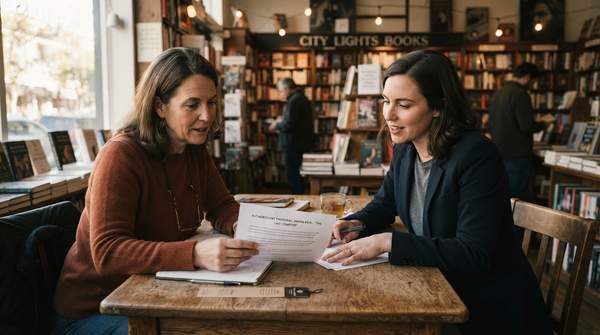
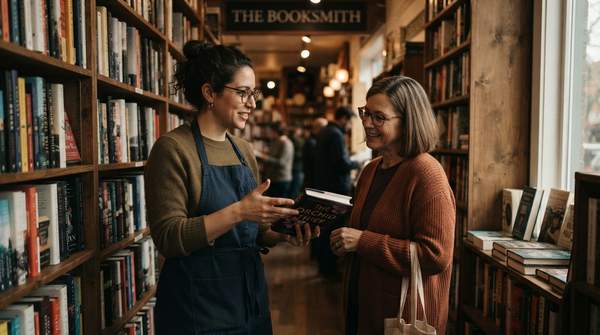
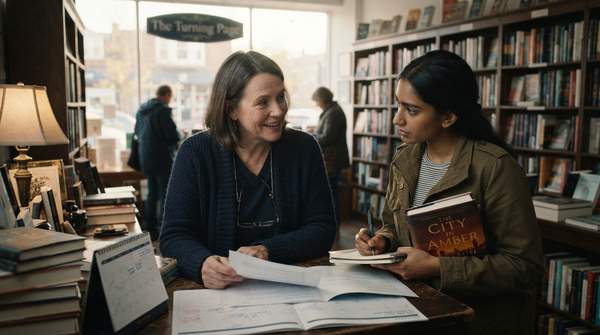
American Booksellers Association membership surged by over 500 in the past year, bringing the total to 3,417 members across 3,783 locations – the highest count since the late 1990s, according to AP News. Substantial growth in independent bookstores challenges a persistent cultural narrative of declining physical retail. Independent booksellers are experiencing their highest expansion in decades, even as the popular perception of their demise lingers. The future of retail increasingly favors specialized, community-driven physical spaces that offer unique experiences, suggesting a lasting shift in consumer values beyond purely transactional models.
A Broader Trend: Physical Booksellers Thrive
- OVER 100 STORES — Barnes & Noble, under CEO James Daunt, expanded its physical footprint by adding more than 100 stores in the past two years, according to ABC News.
- DIVERSE FORMATS — The growth in independent bookstores includes various operational formats, such as general interest shops, mobile stores, and pop-up stores, as reported by AP News.
- NICHE GENRES — Many new independent bookstores cater to the current popularity of specific genres, including romance, fantasy, and the emerging 'romantasy' category, according to AP News.
The expansion of large chain bookstores alongside diverse independent formats and genre specializations confirms a widespread return to physical retail for books. The expansion benefits the entire industry. The return to physical retail signifies a fundamental shift in consumer behavior that values tangible experiences and curated discovery over mere online convenience.
The Idealists and Innovators Behind the Revival
| Metric | Traditional Model | Emergent Model | Impact/Trend |
|---|---|---|---|
| Entrepreneur Profile | General business owners focused on sales | Idealists, mission-driven individuals, career changers | Diversification of ownership and motivations |
| Store Format | Fixed, single-location retail | Flexible, mobile, and pop-up models transitioning to storefronts | Enhanced market reach and adaptability to local needs |
| Space Utilization | Primarily book sales and related merchandise | Multi-functional community hubs (offices, studios, rental spaces) | Increased revenue streams and heightened community value |
Attribution: ABC News and ryanholiday.net
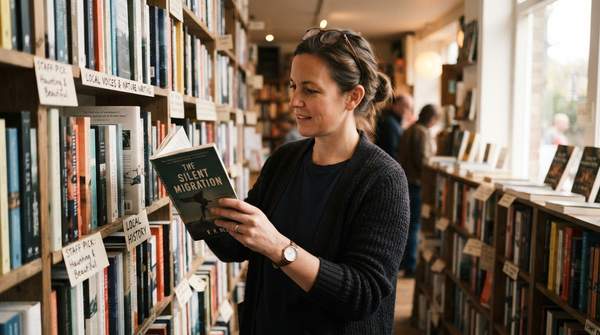
Independent bookselling attracts a new wave of 'idealist' entrepreneurs: young people with a sense of mission, retirees, and middle-aged individuals seeking career changes, according to ABC News. Kelley Hartnett, for instance, opened Double Dog Bookshop in Wentzville, Missouri, in 2023 as a mobile store before establishing a physical storefront. Furthermore, some bookstores now function as multi-purpose cultural hubs, serving as office spaces, podcast recording studios, YouTube video filming locations, and rental spaces for other businesses, according to Ryanholiday. These passionate entrepreneurs are not merely selling books; they are cultivating multi-functional community spaces that adapt to modern needs, fostering unique cultural experiences and becoming indispensable local hubs. The cultivation of multi-functional community spaces indicates a broader trend where retail success hinges on creating 'third places' that offer value beyond transactions.
What Drives the Independent Bookstore Resurgence?
The resurgence of independent bookstores is fundamentally driven by a strategic pivot towards hyper-local engagement and diversified revenue streams. Entrepreneurs leverage flexible formats like mobile and pop-up stores to test markets and build community before committing to permanent locations, as demonstrated by examples like Kelley Hartnett's Double Dog Bookshop. An agile approach, combined with specialization in niche genres like 'romantasy', allows entrepreneurs to cultivate dedicated customer bases that online retailers struggle to replicate, according to AP News.
Beyond sales, these modern bookstores are evolving into essential cultural anchors. By functioning as multi-purpose hubs—offering office spaces, podcast studios, and event venues—they tap into a demand for tangible community connection in an increasingly digital world, according to Ryanholiday. The innovative utilization of physical space creates multiple revenue streams and embeds the bookstore deeply within the local social fabric, making it more resilient and relevant than traditional models. The success of this model has even compelled large chains like Barnes & Noble to aggressively expand their physical footprint, as detailed by ABC News, validating the market-wide re-evaluation of in-person retail experiences.
The Future of Physical Retail Engagement
If current trends persist, physical retail, particularly in specialized sectors like independent bookstores, will likely continue to thrive by prioritizing community engagement and unique experiential offerings over mere transactional efficiency.